













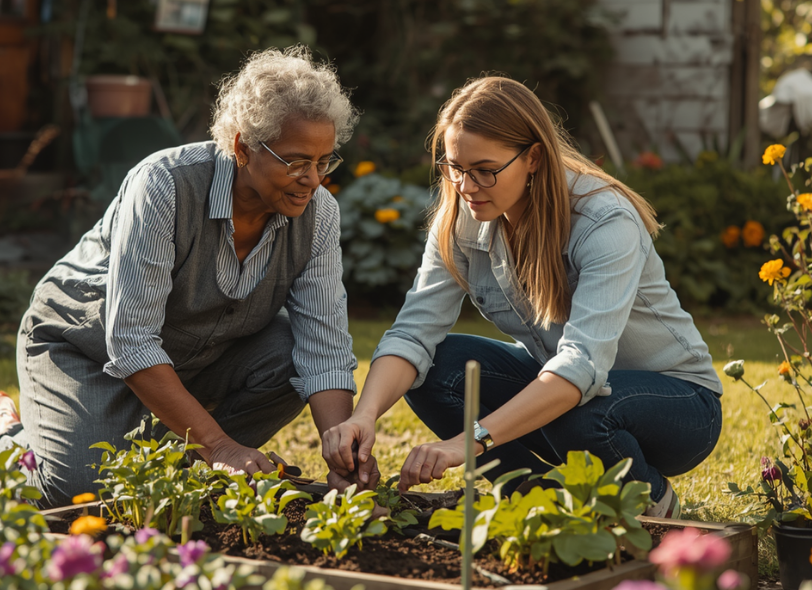
5 Gardening Tips for Elderly People with Reduced Mobility
Gardening is a rewarding and therapeutic activity, and it remains one of the best ways for older adults to stay active, independent and connected to nature. Even with reduced mobility, gardening can be safely adapted to suit individual needs, helping maintain both physical and mental wellbeing. According to the NHS, adults aged 65+ should engage in daily physical activity to improve health, balance and flexibility. Gardening offers a gentle, low-impact way to achieve this while enjoying time outdoors.
Although staying active later in life can offer many benefits, it can be difficult to watch someone who once found joy in tending plants, pruning flowers or simply enjoying the outdoors begin to step back due to reduced mobility. Gardening is often more than just a hobby, it’s tied to independence, routine and wellbeing. If you’ve noticed a loved one struggling to enjoy gardening, there are a few simple adaptations you can help introduce to support them.
5 Simple Gardening Tips For Elderly People for Limited Mobility
Gardening can be easily adapted to reduce strain and make it more accessible:
1. Use Raised Beds and Containers
Raised garden beds or container gardening are ideal for reducing the need to bend or kneel. Pots placed at waist height allow you to garden comfortably from a standing or seated position.
2. Choose Ergonomic Tools
Lightweight tools with padded or extended handles can reduce pressure on joints and improve grip. Long-handled tools are especially helpful for those with limited flexibility.
3. Create a Safe Garden Layout
Clear pathways, non-slip surfaces and accessible seating areas can help prevent falls. This is particularly important as improving balance and preventing falls is a key focus for older adults’ health. [nhs.uk]
4. Focus on Low-Maintenance Plants
Choose plants that are easy to care for, such as herbs, perennials or slow-growing shrubs. This ensures gardening remains enjoyable rather than physically demanding.
5. Take Regular Breaks
Pace yourself and avoid overexertion. Even short periods of activity contribute towards the recommended daily movement levels.
Gardening Safely with Support
For those receiving home care or living with limited mobility, gardening can still be part of daily life with the right support. Organisations like Thrive in the UK recommend adapting the garden layout and seeking help with more physically demanding tasks, such as digging or hedge trimming.
This allows individuals to focus on enjoyable, manageable activities such as planting or watering, while maintaining independence.
You might also consider:
- Gardening with a family member or carer
- Joining a local community garden
- Scheduling gardening during cooler times of the day
Staying active with limited mobility This Summer
Gardening for elderly people with limited mobility is not only possible, it’s highly beneficial. With a few simple adjustments, anyone can continue to enjoy their garden safely and comfortably.
If you’ve noticed a loved one stepping back from the activities they once loved, now is the perfect time to help them reconnect. With a little support, encouragement, or even professional home care, they can safely enjoy their garden again this summer.
Contact our friendly care team to discover how we can support your loved in enjoying their favourite hobby with confidence this summer.
See Also










Our partners